
Physical AI is becoming a contest for control of the real world.

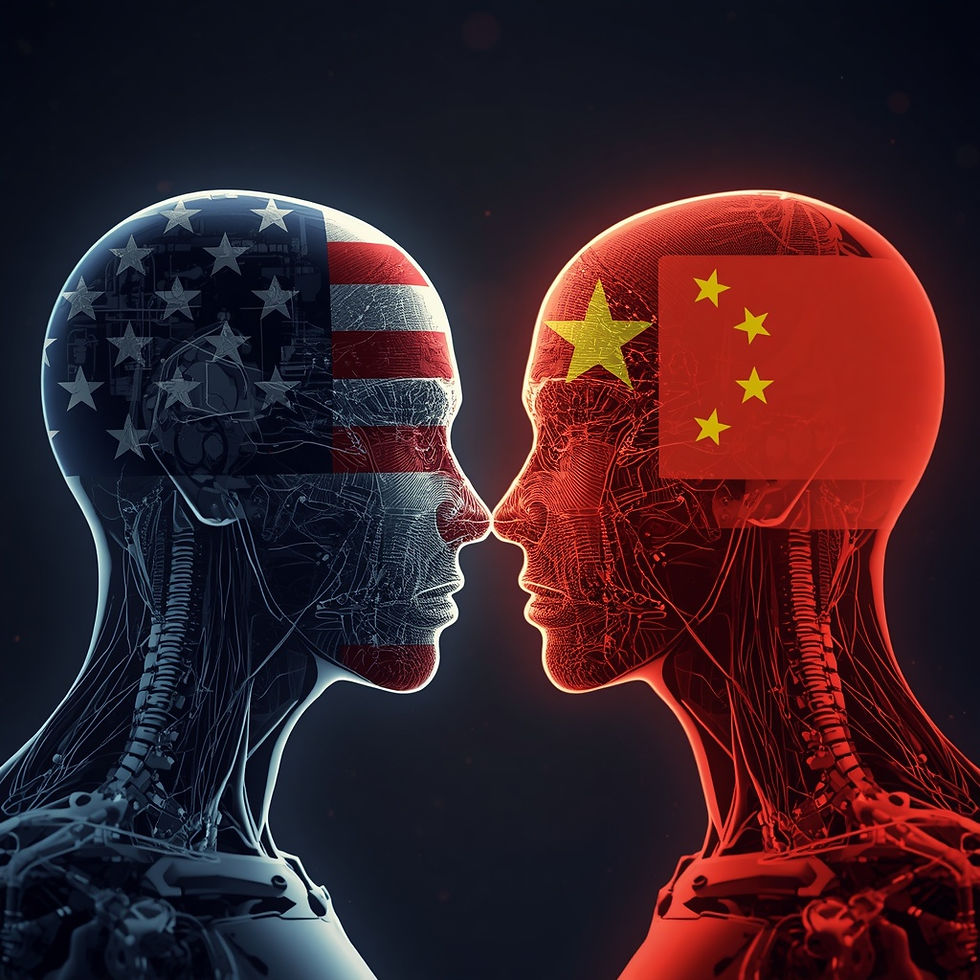
China is advancing fast in physical AI — not only with humanoid robots, but by connecting AI with factories, transport, farms, hospitals, and city infrastructure. Its advantage is not just AI models. It is manufacturing scale, deployment speed, and the ability to learn from real-world operations. China accounted for 54% of global industrial robot installations in 2024 and operates more than two million industrial robots.
At the same time, the U.S. has restricted new Chinese humanoid and quadruped robots, citing cyber risk, data security, and supply-chain concerns.
These two developments are connected.
Physical AI is not only about who builds the smartest robot. It is about who controls the hardware, sensors, data, software updates, operating standards, and the decisions these systems make.
That is why high-trust AI matters.
When AI moves from a screen into a drone, a factory, a warehouse, or public infrastructure, a wrong decision has a physical cost. A model cannot simply be “mostly right.”
This is where neuro-symbolic AI can play an important role.
Neural AI helps machines see, learn, and adapt in complex environments. Symbolic rules add clear boundaries: safety constraints, operating policies, permissions, and conditions where the system must stop or hand control back to a human.
In simple words:
AI can decide what it sees.
Rules must define what it is allowed to do.
The future of physical AI will not be won by autonomy alone.
It will be won by systems that are reliable, explainable, secure, and governed well enough for people to trust them in the real world.


Comments