
AI Has Entered a New Phase: The Race to Shape the Rules


Over the past year, I've shared my thoughts on why High-Trust AI will become a strategic differentiator for enterprises.
Recent global developments reinforce that this conversation is now extending beyond enterprises to nations.
In the past few weeks alone, we've seen:
• The United Nations calling for stronger global AI governance.
• UNESCO advocating phased AI governance frameworks to help countries build institutional readiness.
• New regulations emerging across multiple jurisdictions.
• And now, China's launch of the World AI Cooperation Organization (WAICO) to help shape international AI governance.
At first glance, these appear to be independent developments.
I see something different.
They are all signals of the same transition.
The global AI race is no longer just about building the most powerful models. It's about defining the rules by which AI will operate.
History has shown that countries shaping technical standards often shape global markets.
AI governance is following the same trajectory.
For boards and executive teams, this has an important implication.
Most discussions still focus on which model to deploy, how to increase productivity, or which AI platform to adopt.
Those are important decisions. But they are no longer sufficient.
As AI evolves from generating recommendations to autonomously executing business processes, organizations must answer a more fundamental question:
- Can our AI systems be trusted to act within business policies, regulatory boundaries, and acceptable risk thresholds?
This is where I believe High-Trust AI becomes a strategic capability rather than a compliance initiative. Trust won't come from larger models alone.
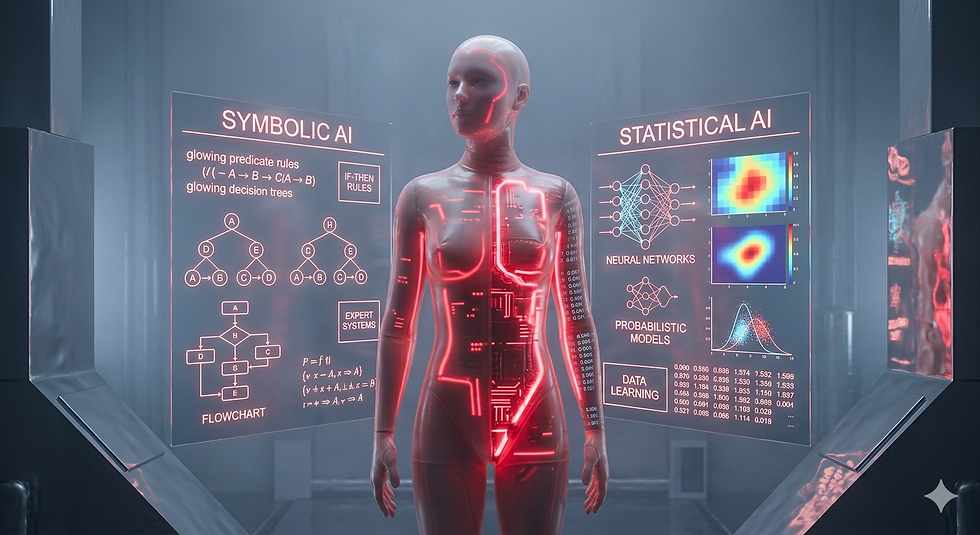
It will come from AI operating models that combine probabilistic intelligence with deterministic governance—bringing together policy enforcement, knowledge-driven reasoning, explainability, human oversight, auditability, and continuous assurance.
In other words, the future of enterprise AI won't be defined solely by how intelligent an agent is.
It will be defined by how reliably that intelligence can be governed. As governments compete to influence the future of AI governance, enterprises have an opportunity to lead in a different way:
Build AI systems that customers trust, regulators understand, and boards can confidently stand behind.
That, in my view, is what High-Trust AI is really about.

Comments