
Physical AI doesn't fail only because the AI model is wrong.

It can fail because the physical system cannot reliably execute what the model decided.
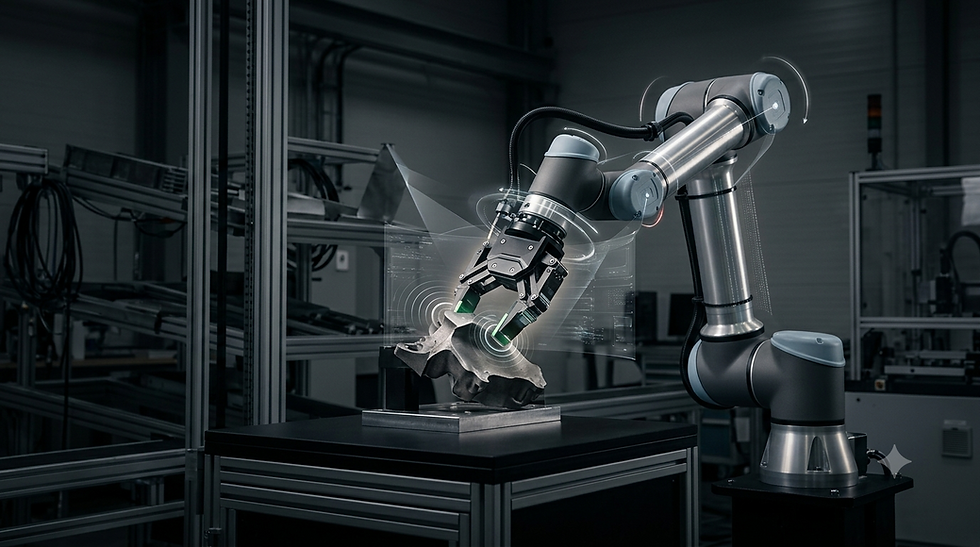
A recent article from the Association for Advancing Automation highlights an important point about reliable robot manipulation: better models are only part of the equation.
Physical AI also needs:
→ Adaptability to real-world variation
→ Reliable execution of AI-generated actions
→ Physical feedback beyond vision and simulation
→ Flexible tooling that expands what the system can actually do
This leads to a broader principle that I believe applies beyond robotics:
Intelligence is not the same as reliable autonomy.
An AI system can correctly perceive a situation and generate a reasonable action.
But before that action creates a real-world consequence, the system needs to answer:
Can I execute this action?
Is the action valid under the current conditions?
Did the intended action actually happen?
What should I do if reality differs from my expectation?
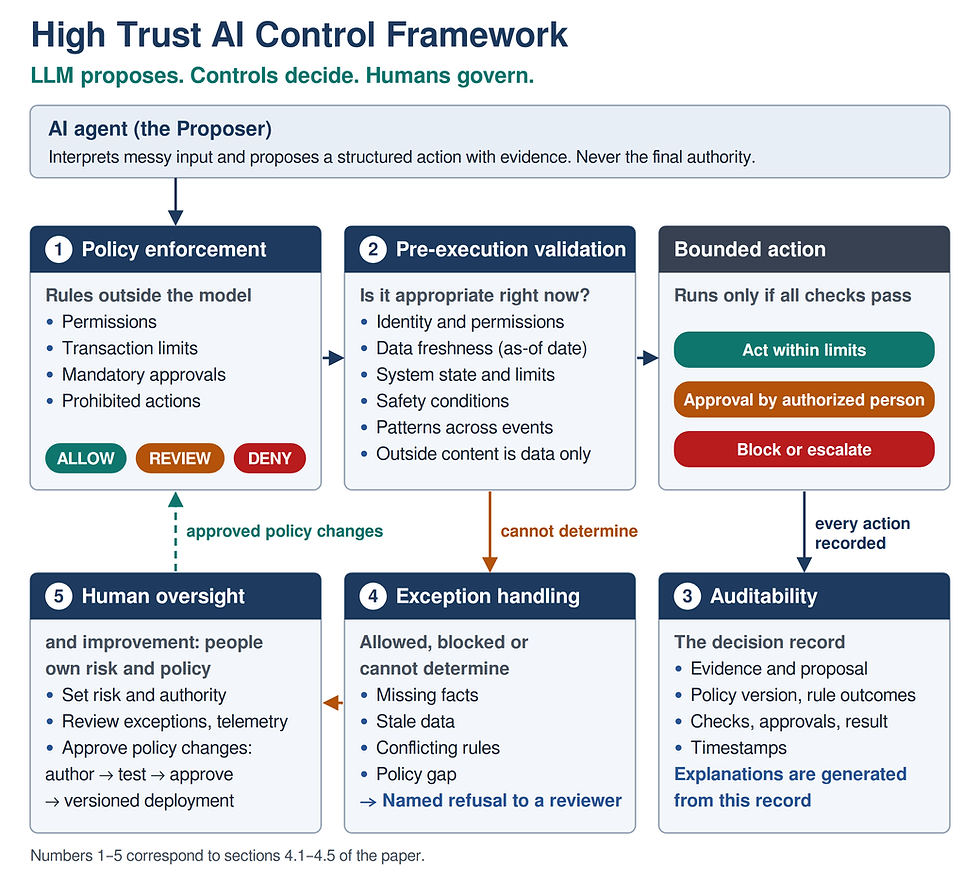
This is where I see the importance of a trust and control layer between AI reasoning and execution.
In physical AI, that layer may involve sensors, force feedback, tool state and deterministic safety constraints.
In enterprise AI, it may involve policies, business rules, validation, authorization and auditability.
The underlying problem is remarkably similar:
AI can decide. But a trustworthy autonomous system must also validate before it acts and verify after it acts.
That is why I believe the next phase of Physical AI will not be defined only by better foundation models or better robot learning.
It will be defined by how well we build the systems around the intelligence.
This is one of the central ideas behind High Trust AI: moving from AI that can make decisions to AI systems that can make decisions reliably, verifiably and within defined boundaries.
Interesting perspective from Association for Advancing Automation — Physical AI in the Real World: Four Requirements for Reliable Robot Manipulation
Comments