
When AI Enters the Battlespace, Governance Stops Being Optional


A recent symposium on International Law and Artificial Intelligence in Armed Conflict highlights an important shift in the global AI conversation.
The debate is no longer
simply "Can AI be used in military operations?"
The real question is:
How do we maintain meaningful human control over increasingly autonomous AI systems operating in high-stakes environments?
What struck me is how closely these concerns mirror the challenges enterprises are beginning to face with Agentic AI.
In both cases, AI is moving beyond analysis and recommendation. It is starting to influence—or potentially execute—actions that carry significant operational, legal, and ethical consequences.
The symposium raises issues such as accountability, attribution, reliability under uncertainty, and the adequacy of existing governance frameworks.
These are not military-only problems. They are governance problems that every organization deploying autonomous AI will eventually encounter.
This reinforces a point I’ve made in my earlier posts:
As AI transitions from recommending actions to taking actions on behalf of humans, the quality of governance becomes more important than the sophistication of the model itself.
For enterprise leaders, that means asking a different set of questions:
• Can our AI agents be constrained by deterministic business policies?
• Do we have human approval gates for high-impact decisions?
• Can we explain why an autonomous action was taken?
• Is every decision auditable and attributable?
• Can we demonstrate reliability under uncertain or changing conditions?
This is why I believe High-Trust AI will become a defining enterprise capability.
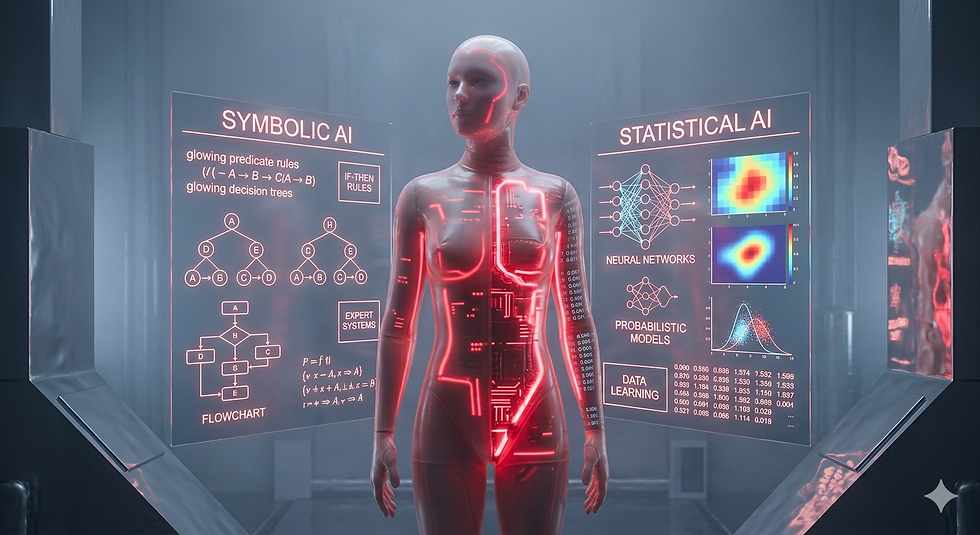
In my view, the most promising path forward is Neuro-Symbolic AI—combining the adaptive reasoning of Large Language Models with symbolic knowledge, deterministic rules, and policy engines that enforce organizational and regulatory constraints.
The lesson from the international law community is clear:
The harder AI decisions become, the less organizations can rely on probabilistic intelligence alone.
The future belongs to AI systems that are not only intelligent, but also governable, explainable, and reliably under human control.
That is the foundation of High-Trust AI.

Comments